
Garden Lighting Design for Brisbane Gardens: A Homeowner’s Guide to Planning Your Outdoor Lighting Project
August 14, 2026 3:35 am -Transform your SEQ garden into a space you can enjoy from dusk until well after dark, with lighting that’s beautiful, functional, and built for our subtropical climate.
If there’s one upgrade I recommend to almost every client planning an outdoor project: it’s garden lighting. Here in Brisbane and across South East Queensland, we’re lucky to have warm evenings for most of the year, which means our outdoor spaces get used long after the sun goes down. Yet so many beautiful gardens go dark and unused once daylight fades, simply because the lighting was never part of the original plan.
As a horticulturalist who has designed and installed gardens across SEQ for years, I’ve seen firsthand how the right lighting plan can completely change how a family uses their outdoor space. A well-lit garden isn’t just about looking good in photos, it’s about safety on your pathways, atmosphere for entertaining, and finally getting full value from the landscaping you’ve invested in. In this guide, I’ll walk you through exactly how to plan a garden lighting project from start to finish, tailored specifically to Brisbane’s climate and lifestyle.
Why Garden Lighting Deserves a Place in Your Outdoor Project Plan
Too often, lighting is treated as an afterthought, something to bolt on once the paving is laid and the plants are in the ground. I always encourage clients to think about lighting at the very beginning of the design process, alongside decisions about pavers, garden beds, and entertaining areas. Planning lighting early means cabling and power points can be positioned before hardscaping goes down, fixtures can be chosen to suit the overall design language, and every layer of the garden, from feature trees to garden art, is considered as part of one cohesive night-time picture.
There are practical reasons to prioritise lighting too. SEQ’s long, warm evenings mean outdoor living areas are used well into the night for most of the year. Good lighting extends the usable hours of your garden, improves safety around steps, pools, and uneven ground, and adds a genuine sense of security around the perimeter of your property. It also protects your investment. A beautifully landscaped garden that disappears into darkness every evening isn’t delivering the full return on the time and money spent creating it.
Understanding the Layers of Garden Lighting
Professional lighting design works in layers, much like planting design works with height and texture. Rather than choosing one type of light and using it everywhere, we combine several layers to create depth, contrast, and interest.
- Ambient lighting sets the overall mood of the space, often achieved with soft wall-mounted fixtures, string lights over an alfresco area, or pendant lighting near a dining setting.
- Task lighting is functional, illuminating steps, entertaining zones, outdoor kitchens, and any area where safe, practical light is needed.
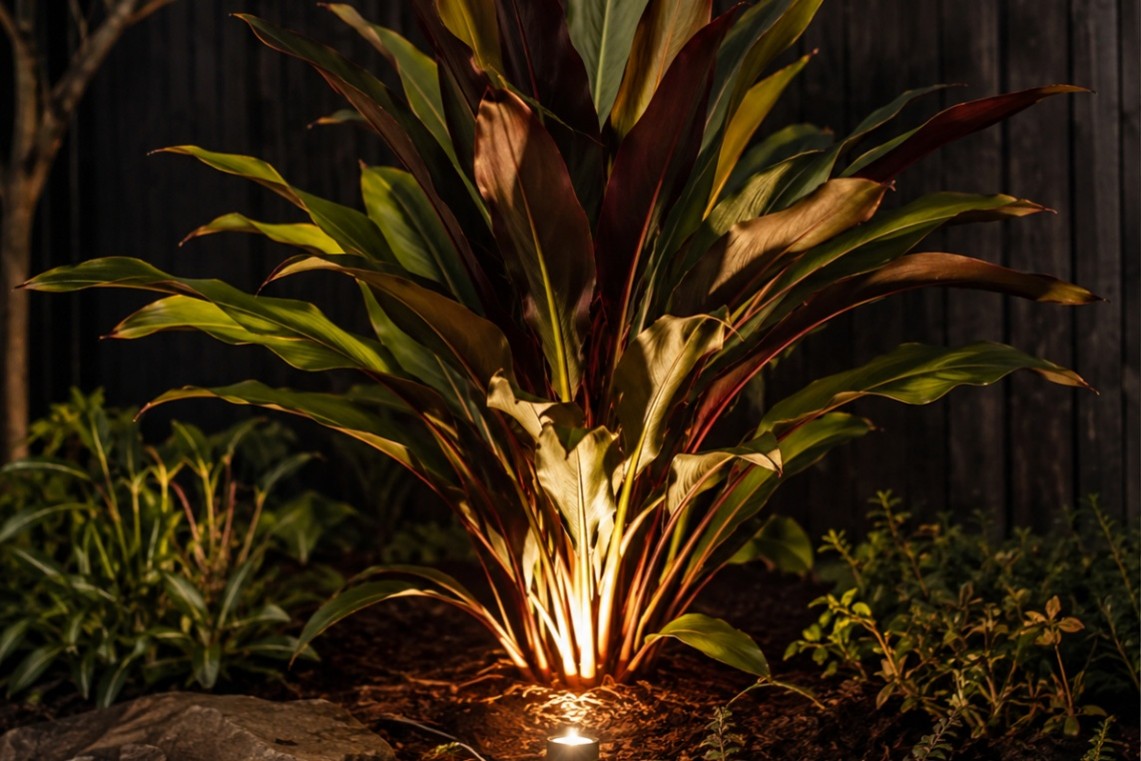
- Accent or feature lighting draws the eye to specific elements, uplighting a feature tree, highlighting a piece of garden art, or grazing light across a textured retaining wall.
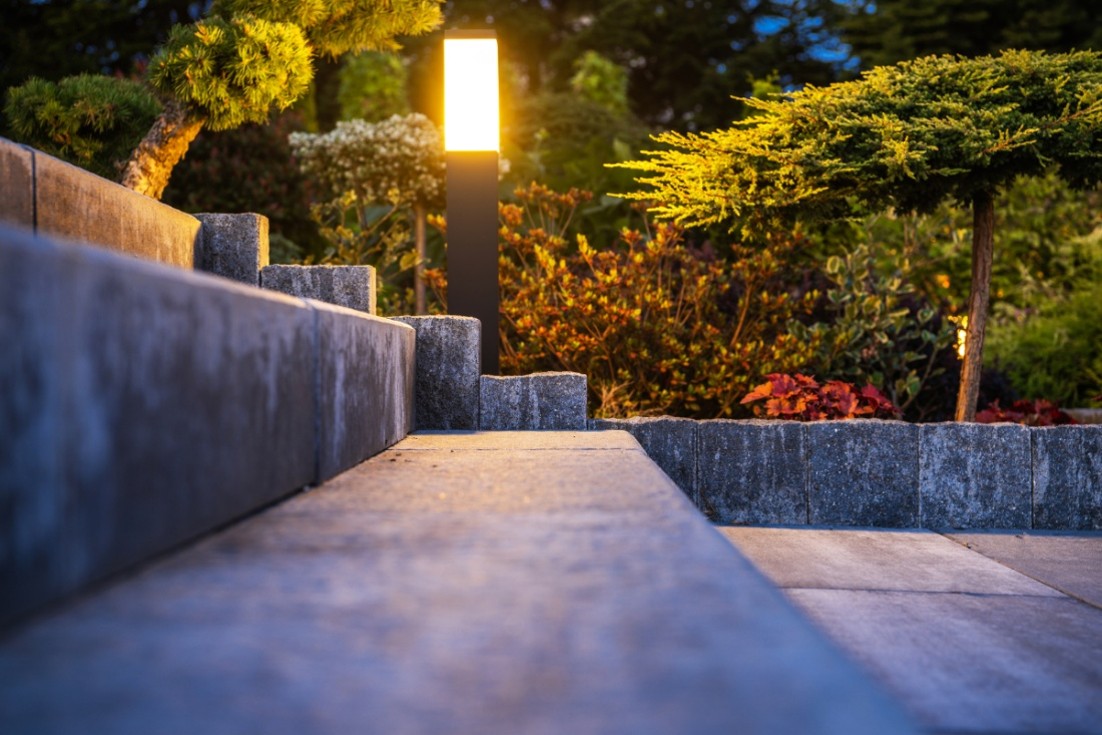
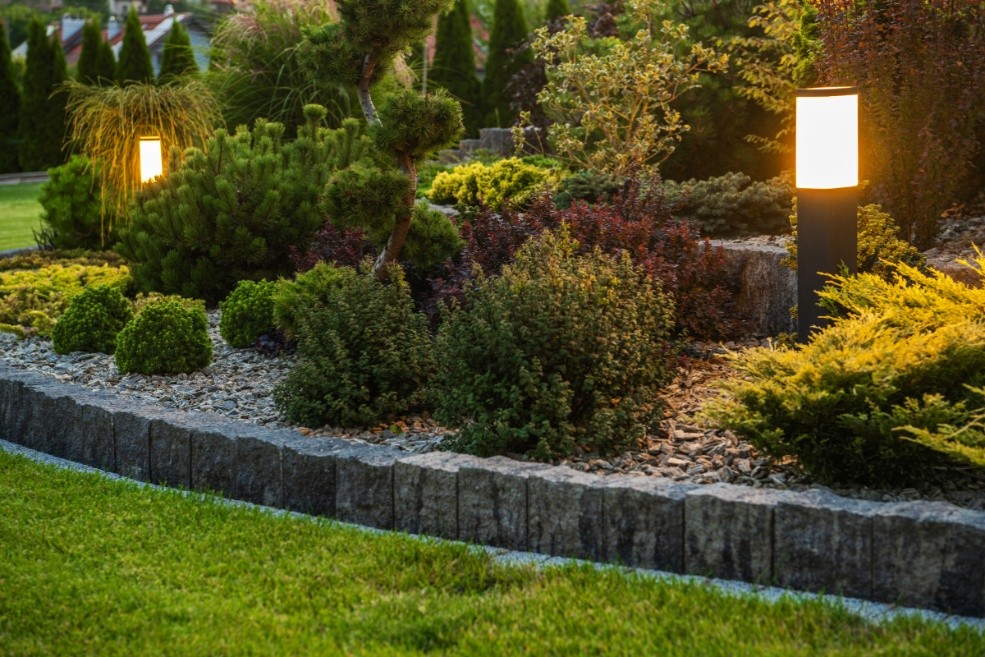
- Pathway lighting guides movement through the garden after dark, marking the edges of paths, steps, and garden bed borders at a low level so the light source itself stays discreet.
Combining these layers thoughtfully, rather than relying on a handful of floodlights, is what separates a garden that looks lit from one that looks designed.
Planning Your Lighting Layout: Key Zones to Consider
When I sit down with a client to plan a lighting project, we work zone by zone rather than fixture by fixture. This ensures nothing gets missed and the final result feels intentional.
Entertaining areas, such as alfresco spaces, outdoor kitchens, and dining zones, generally need the most layered approach, combining ambient and task lighting so the space is comfortable for both quiet evenings and larger gatherings. Pathways and steps need consistent, low-glare lighting for safety, particularly important around pools, sloped blocks, and properties with young children or older family members. Garden beds and feature plants benefit from subtle uplighting that highlights trunk form, foliage texture, and seasonal colour without washing out the surrounding space. Water features and structures, including ponds, fountains, pergolas, and retaining walls, often become striking focal points once lit correctly, adding movement and depth to the overall design. Boundaries and access points, such as driveways, side gates, and front entries, round out the plan, balancing security with a welcoming first impression.
Choosing Fixtures Built for Brisbane’s Subtropical Climate
Not all outdoor lighting is created equal, and this matters more in SEQ than in many other parts of Australia. Our combination of high humidity, heavy summer rainfall, intense UV exposure, and the occasional storm event puts real demands on outdoor fixtures.
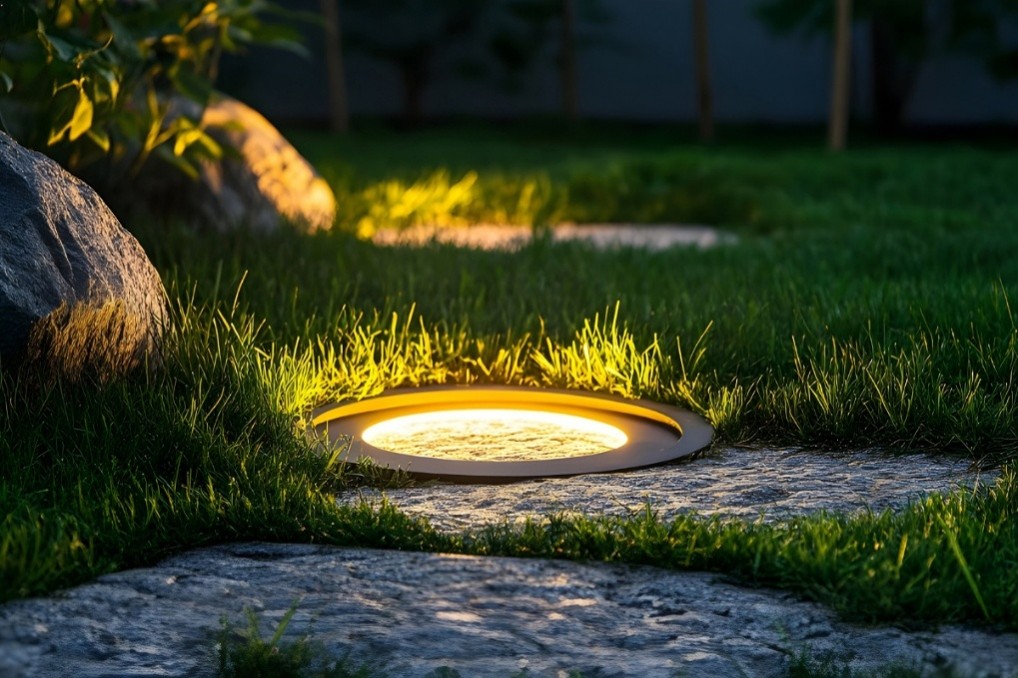
I always recommend fixtures with a minimum IP65 rating for general garden use, and IP67 or higher for anything near a pool, water feature, or low-lying area prone to pooling water after heavy rain. Marine-grade or powder-coated aluminium and stainless steel fixtures hold up far better than cheaper plastic housings, which tend to yellow, crack, or corrode within a couple of seasons in our climate. LED fixtures are the clear choice for garden lighting today. They run cool, which matters when lights sit close to foliage and mulch, use a fraction of the energy of older halogen systems, and last considerably longer, an important consideration given how much of a Brisbane garden’s lighting sits outdoors in direct sun and rain year-round.
Highlighting Your Garden’s Best Features After Dark
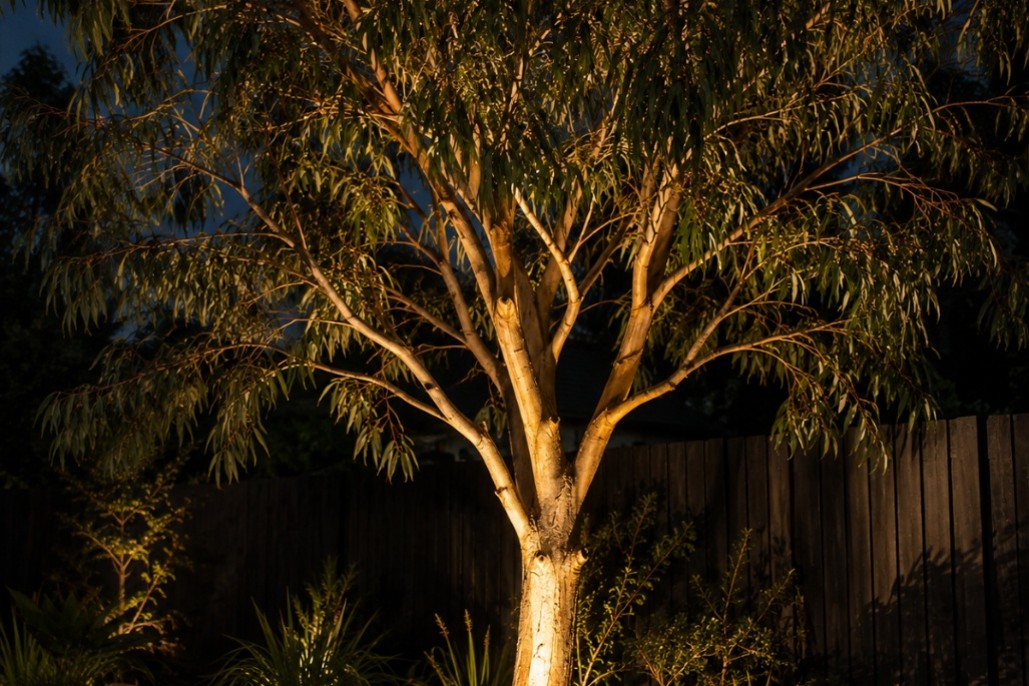
Lighting design should always work hand in hand with the plant selections and hardscape choices already in your garden. Feature trees and specimen plants make natural focal points for uplighting, and this is especially effective with plants chosen for year-round structure and seasonal colour, keeping the garden visually engaging even in cooler months when many other elements of the garden have quietened down.
Pathways and paved entertaining areas also play a starring role once the sun goes down. The material you’ve chosen for your paving affects how light is reflected and diffused across a space, so it’s worth thinking about lighting and paving together rather than as separate decisions, particularly when it comes to Hardscape choices that either complement or compete with your lighting plan. Lighter, textured pavers tend to bounce ambient light beautifully, while darker materials benefit from more direct downlighting to remain safe and visible underfoot.
Lighting Solutions for Small Gardens, Courtyards, and Townhouses
Not every Brisbane property has a sprawling backyard, and that’s absolutely fine when it comes to garden lighting. In fact, smaller footprints often benefit the most from a well-considered lighting plan, since every fixture and every beam of light works harder in a compact space.
For clients with more compact outdoor areas, I take the same layered approach used in working with a compact yard or courtyard, scaling fixtures down and using vertical elements, such as lit trellises, feature walls, or espaliered planting, to create depth without needing extra floor space. Soft wall-washing and discreet step lighting can make a small courtyard feel considerably larger and more inviting once evening falls.
Smart Controls and Energy Efficiency
Modern garden lighting doesn’t need to mean flicking a switch on and off manually every evening. Smart controllers and timers, similar in principle to the smart irrigation systems many of my clients have already installed, allow lighting to be scheduled, dimmed, or grouped into zones and controlled from a smartphone app. This means your entertaining area can be set to a warm, dimmed glow for a dinner party, while pathway and security lighting continues to operate on its own automated schedule. Solar-assisted options can also supplement mains-powered systems in sunnier positions, reducing running costs, though I generally recommend mains or low-voltage transformer systems as the primary source for anything requiring reliable, consistent brightness, particularly around steps and pool areas.
Safety, Compliance, and Working with a Licensed Professional
Garden lighting involves outdoor electrical work, and in Queensland, that means any mains-voltage wiring, new circuits, or permanent power connections must be installed or signed off by a licensed electrician. Low-voltage systems, run through a transformer, offer more flexibility and are generally safer for DIY-friendly elements like additional pathway lights, but the overall system design, cable runs, and transformer capacity are still best planned by professionals who understand both the electrical requirements and how the lighting will interact with your planting and hardscape over time.
At Chandler Park Landscaping, we coordinate the full outdoor project, working alongside licensed electricians to ensure your lighting plan is installed safely, meets Australian Standards, and is positioned correctly relative to garden beds, irrigation lines, and future plant growth.
Budgeting for Your Garden Lighting Project
Lighting budgets vary considerably depending on the size of your garden and the complexity of the design. A simple pathway and entry lighting package for a smaller SEQ property might involve a handful of fixtures and a basic transformer setup, while a full entertaining area with layered ambient, task, and feature lighting across a larger block represents a more significant investment.
I always encourage clients to view garden lighting as part of the overall landscaping budget from day one, rather than a separate add-on decided at the end of a project. Planning conduit and cabling runs during the initial hardscaping stage is considerably more cost-effective than retrofitting lighting into an already-finished garden, where cables need to be run under existing paving or around established garden beds.
Final Thoughts: Let Your Garden Shine, Day and Night
A garden that looks stunning at midday but disappears the moment the sun sets is only delivering half of its potential. With the right lighting plan, layered thoughtfully across your entertaining areas, pathways, feature plants, and garden structures, your SEQ garden becomes a space you and your family can enjoy for many more hours of the day, safely and beautifully, all year round.
If you’re planning an outdoor project and want lighting considered from the very first sketch, I’d love to help. Get in touch with Nigel and the team at Chandler Park Landscaping, and let’s design a garden that works just as hard after dark as it does in daylight.
Frequently Asked Questions
- What is the best type of outdoor lighting for a Brisbane garden?
LED fixtures with at least an IP65 weatherproof rating are the best choice for Brisbane gardens, as they handle our humidity, heat, and heavy summer rain far better than halogen or lower-rated plastic fixtures.
- How much does garden lighting cost in Brisbane?
Costs vary widely depending on garden size and design complexity, ranging from a simple pathway lighting package for a smaller property to a fully layered system across a large entertaining area and garden. It’s best to plan lighting into your overall landscaping budget for an accurate quote.
- Do I need an electrician for garden lighting?
Yes, any mains-voltage wiring or new electrical circuits must be installed by a licensed electrician in Queensland. Low-voltage transformer-fed systems offer more flexibility, but overall system design is still best handled by professionals.
- What is the difference between low-voltage and mains-voltage garden lighting?
Low-voltage systems run through a transformer and are generally safer and more flexible for garden use, while mains-voltage lighting connects directly to your home’s electrical circuit and requires full electrician installation.
- Can garden lighting be added to an established garden, or does it need to be planned from the start?
Garden lighting can absolutely be retrofitted into an established garden, though it’s more cost-effective and less disruptive to plan cabling and power points at the beginning of a landscaping project, before paving and garden beds are finished.
- How do I light a small courtyard or townhouse garden?
Small spaces benefit from scaled-down fixtures, vertical lighting elements like lit trellises or feature walls, and soft wall-washing, which can make a compact courtyard feel considerably larger and more inviting after dark.
- What is uplighting and where should it be used?
Uplighting involves positioning a fixture at ground level to shine light upward onto a feature, typically a specimen tree, sculptural plant, or piece of garden art, creating dramatic shadows and highlighting form and texture.
- Are solar garden lights a good option for SEQ gardens?
Solar lights work well as a supplementary option in sunny positions, but for reliable brightness around steps, pools, and entertaining areas, a mains or low-voltage transformer system is generally recommended as the primary lighting source.
- How can I control my garden lighting without switching it on manually every night?
Smart controllers and timers allow garden lighting to be scheduled, dimmed, or grouped into zones and adjusted via a smartphone app, so different areas of the garden can operate on their own automated settings.
- Will garden lighting damage my plants or irrigation system?
No, when installed correctly by professionals who understand your garden’s layout, lighting cables and fixtures are positioned to avoid root zones and irrigation lines, and LED fixtures run cool enough to sit safely near foliage and mulch.
Comments are closed here.