
Fire-Resistant Landscaping in SEQ: Protecting Your Home as Bushfire Season Begins
July 1, 2026 2:55 am -As temperatures drop and the air dries out, Southeast Queensland moves into bushfire season. While we don’t experience the same intensity as some southern states, SEQ’s bushland fringes, acreage properties, and semi-rural suburbs are far from immune. Every year, council fire bans and “total fire ban” warnings remind us that preparation matters – and one of the most overlooked forms of preparation is right outside your front door: your garden
A well-designed landscape can genuinely slow the spread of fire, reduce ember attack, and give your home a fighting chance. A poorly designed one can do the opposite, turning your own garden beds into fuel. In this guide, we’ll walk through how to create a fire-resistant landscape that’s still lush, liveable, and true to the SEQ lifestyle you love
Why Fire-Resistant Landscaping Matters in SEQ
Southeast Queensland’s bushfire risk often surprises homeowners who associate fire season with Victoria or New South Wales. But our dry, mild winters and early spring – combined with dense bushland corridors running through suburbs like the Scenic Rim, Redlands, Moreton Bay, and parts of Brisbane’s outer suburbs – create real risk from roughly July through to November
Embers, not flame fronts, cause most home losses in a bushfire. Embers can travel kilometres ahead of a fire and ignite anything dry, dense, or flammable – including garden mulch, overgrown shrubs, and leaf litter sitting in gutters. The good news is that thoughtful landscaping design directly addresses this risk by creating what fire authorities call “defensible space” around your home.
Understanding the Defensible Space Zones
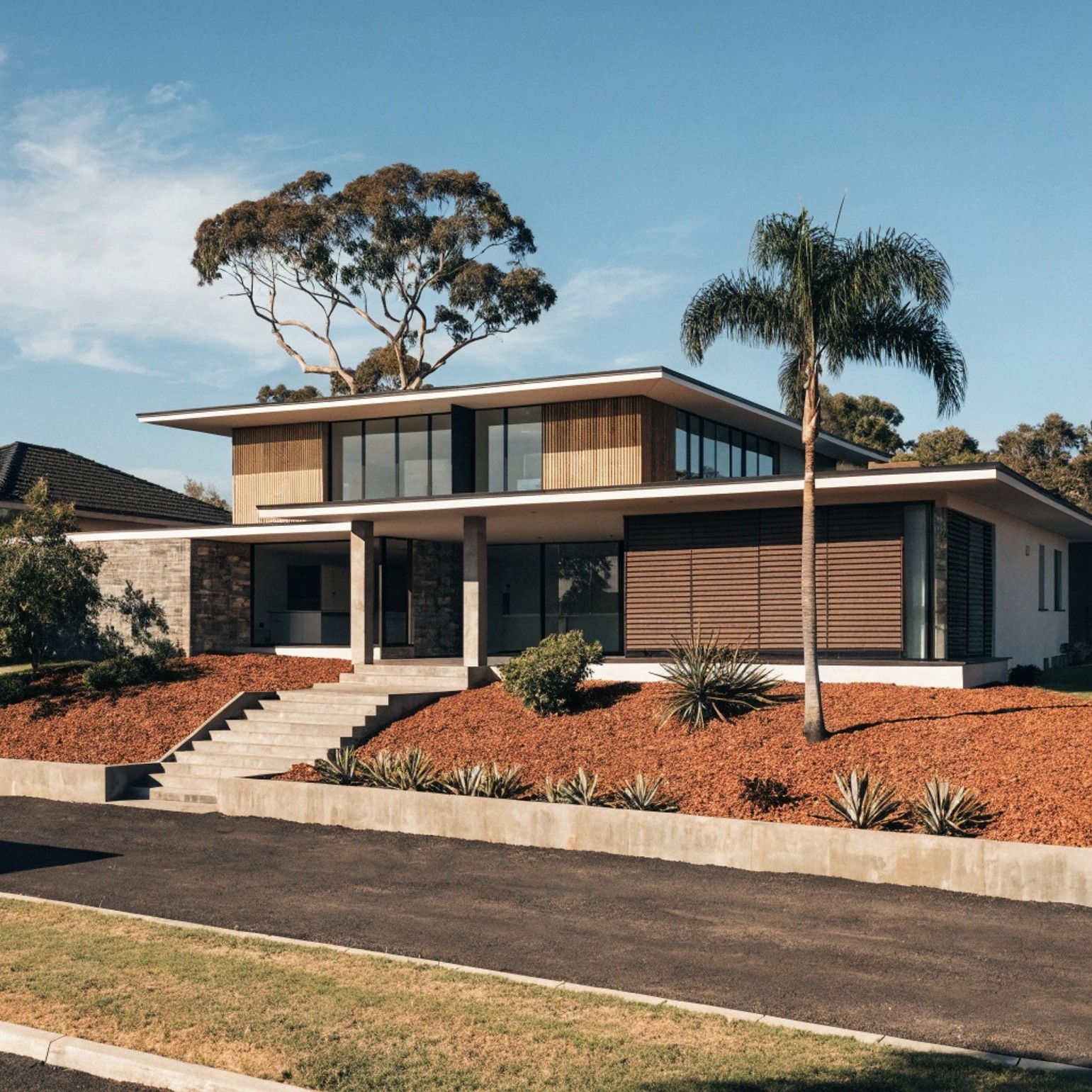
Queensland Fire and Emergency Services and bushfire planning guidelines generally recommend thinking about your property in zones radiating out from your home:
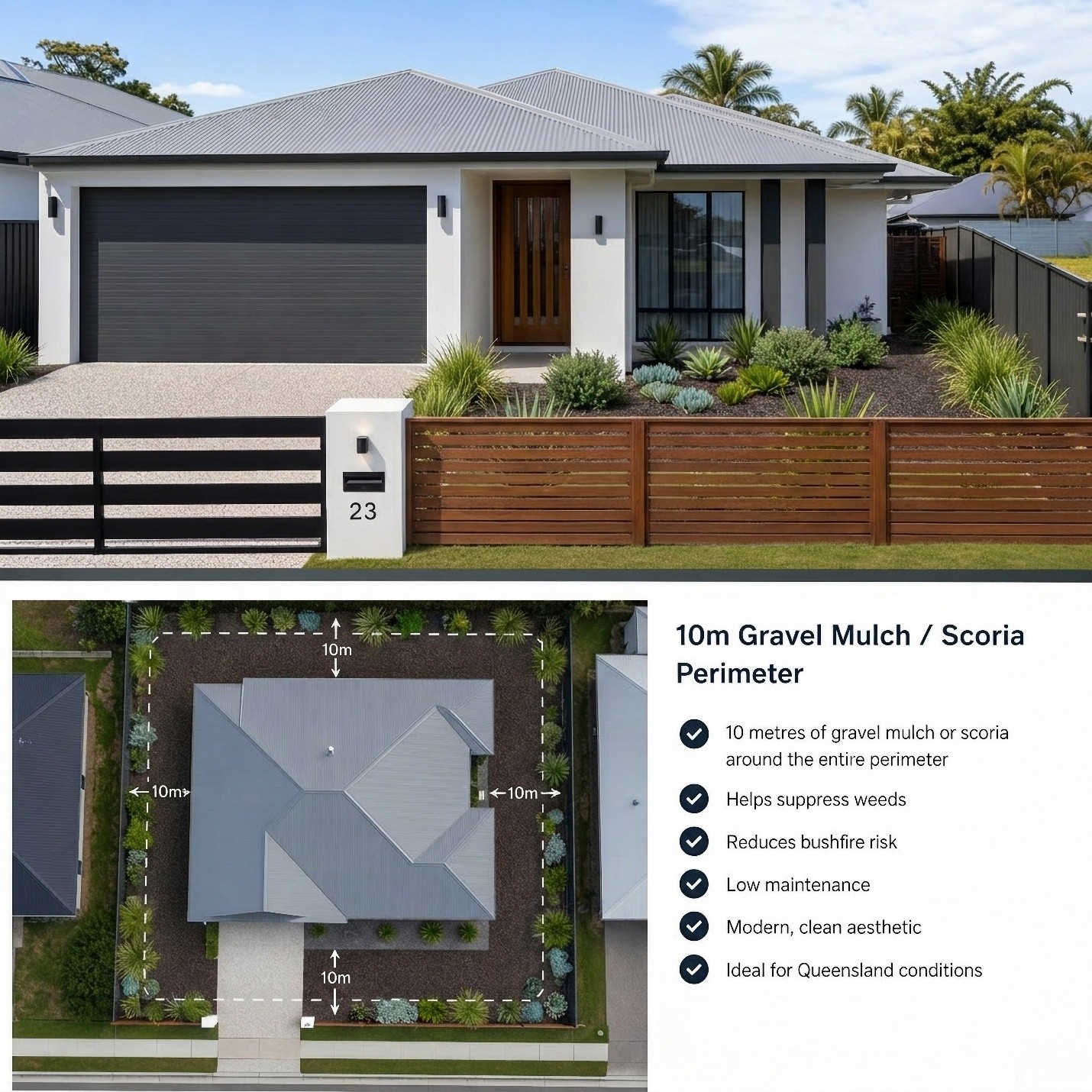
- Zone 1 (0–10 metres from the house): The most critical area. Keep this zone lowfuel, well-maintained, and free of flammable materials close to walls and windows.
- Zone 2 (10–20 metres): A buffer zone where plant spacing and selection still matter, but density and casual greenery can increase slightly
- Zone 3 (beyond 20 metres): Often bushland or open paddock on acreage properties, where broader fuel management and slashing become the priority
For most suburban blocks, Zone 1 is where landscaping decisions have the greatest impact – and it’s the zone we’ll focus on most in this guide
Choosing Fire-Resistant Plants
No plant is entirely fireproof, but some are far more fire-retardant than others. The key characteristics to look for are high moisture content, low oil and resin content, minimal dead or papery material, and an open, non-flammable growth habit.
Plants to Favour
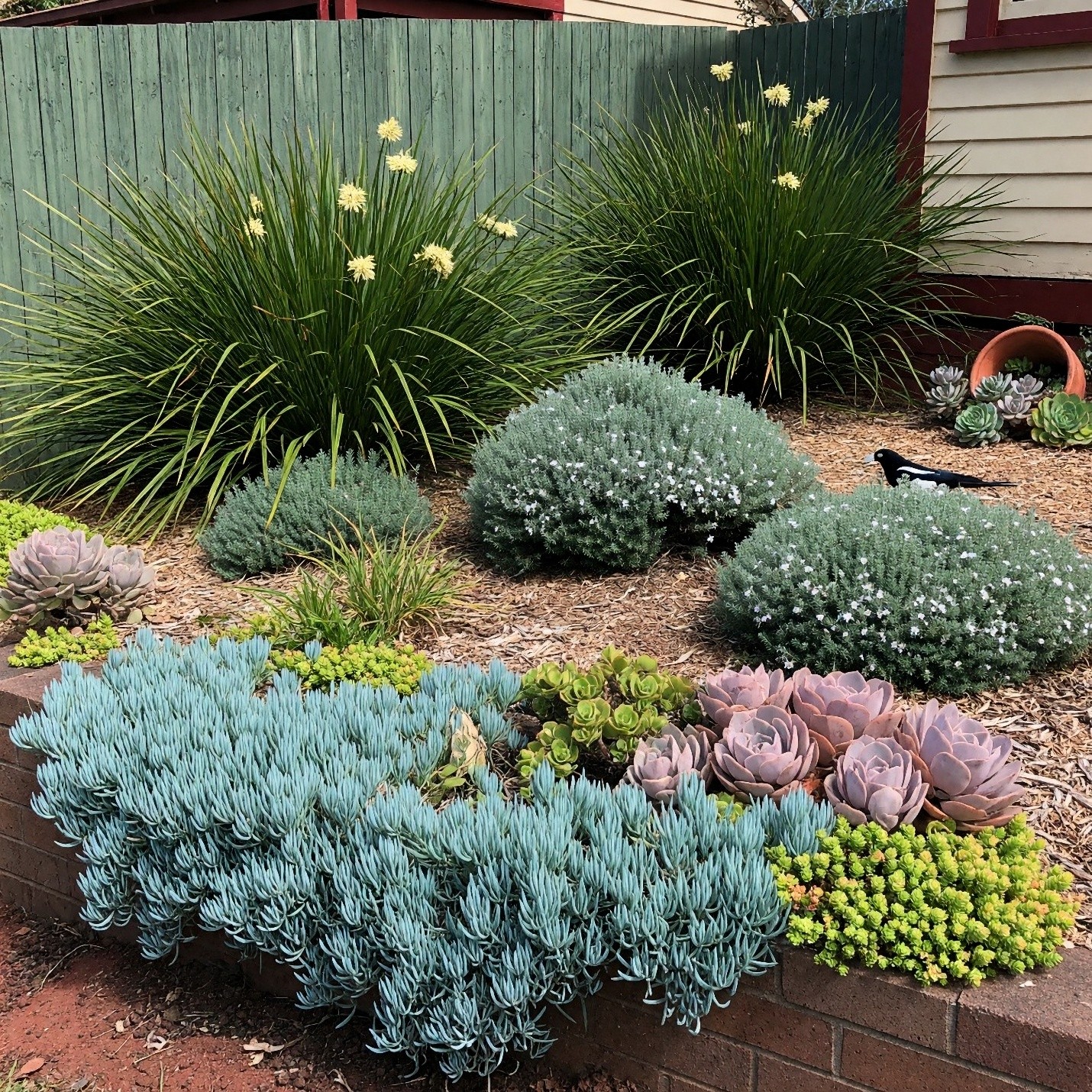
- Lomandra (mat-rush) – hardy, low, moisture-retentive tufting grass
- Westringia (native rosemary) – dense but low-oil and easy to keep tidy
- Succulents such as Agave and Aloe – high water content, slow to ignite
- Lilly Pilly (Syzygium) hedging – attractive, dense, and moisture-rich when well-watered
- Deciduous and broad-leafed natives over needle-leafed or oily species
Plants to Use With Caution or Avoid Near the Home
- Eucalyptus and other oil-rich natives planted directly against the house
- Ornamental grasses left to dry out and go to seed (such as pampas grass or unmaintained native grasses)
- Conifers and other resinous species with fine, dense foliage
- Climbing vines on timber fences or pergolas attached to the house
This doesn’t mean ruling out native gardens altogether – in fact, a well-planned native habitat garden can be both fire-conscious and biodiverse. The trick is plant placement, spacing, and ongoing maintenance rather than avoiding natives entirely.
Smart Layout and Spacing
How you arrange plants matters just as much as which plants you choose. Fire spreads more easily through continuous, touching vegetation – so breaking that continuity is one of the simplest and most effective fire-resistant design strategies.
- Leave clear gaps between shrubs and trees, especially within 10 metres of the house
- Avoid “ladder fuels” – low shrubs positioned directly beneath tree canopies that allow fire to climb from ground level into the tree line
- Keep trees pruned so canopies don’t overhang the roofline
- Group plants in clusters separated by non-flammable surfaces such as paving, gravel, or mown lawn
- Remove dead branches, bark litter, and built-up leaf matter regularly, particularly in gutters and under decks
Hardscaping as a Fire Break
Hard, non-combustible surfaces are one of your most powerful tools in defensible space design. Gravel paths, paved courtyards, stone retaining walls, and concrete driveways all act as natural firebreaks, interrupting the fuel load close to your home. When choosing pavers for your garden, consider positioning hard surfaces strategically between garden beds and the house, rather than purely for aesthetics.
Other hardscape considerations include:
- Using crushed rock or decomposed granite instead of bark mulch in beds within 10 metres of the house
- Choosing non-combustible fencing materials (steel, masonry, or treated materials) for sections closest to the dwelling
- Positioning patios, driveways, and pool surrounds as deliberate breaks in vegetation
Mulch: Choose Carefully
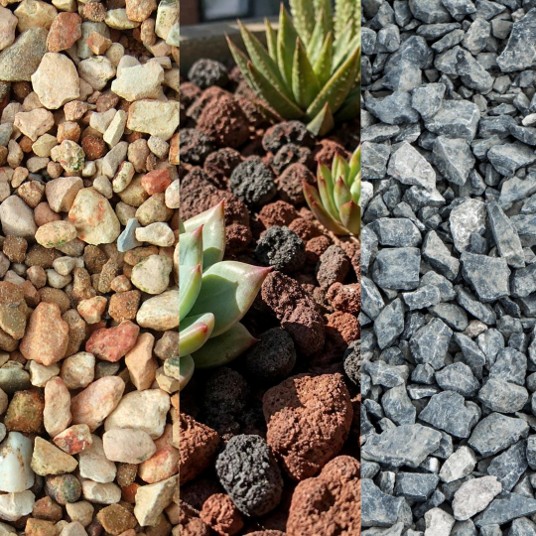
Mulch is essential for soil health and water retention across SEQ gardens, but not all mulch is created equal when it comes to fire risk. Fine, loose, shredded mulches such as pine bark can dry out and ignite quickly, while coarser, larger-chip mulches and inorganic options like gravel or scoria are far more fire-resistant.
- Within Zone 1: use gravel, scoria, or coarse rock mulch rather than bark or straw
- Beyond 10 metres: well-maintained organic mulch is generally fine, provided it’s kept moist and topped up rather than left to compact and dry
- Always keep mulch beds clear of direct contact with timber decking, fences, and external walls
Irrigation and Moisture Management
A well-irrigated garden is a more fire-resistant garden. Moist soil and hydrated plants are significantly slower to ignite than dry, stressed vegetation. This is where a properly designed irrigation system earns its keep twice over – keeping your garden looking its best through winter dry spells while quietly reducing fuel load risk. If you haven’t already, it’s worth reviewing our guide to smart irrigation systems for Brisbane gardens to see how automated, weather-responsive watering can keep Zone 1 plantings consistently hydrated through the cooler, drier months.
- Prioritise irrigation coverage for Zone 1 plantings closest to the home
- Consider a dedicated “green zone” of well-watered lawn or groundcover directly around the house perimeter.
- Check and maintain irrigation systems before bushfire season begins, ensuring no blocked or broken heads
Seasonal Pre-Season Checklist
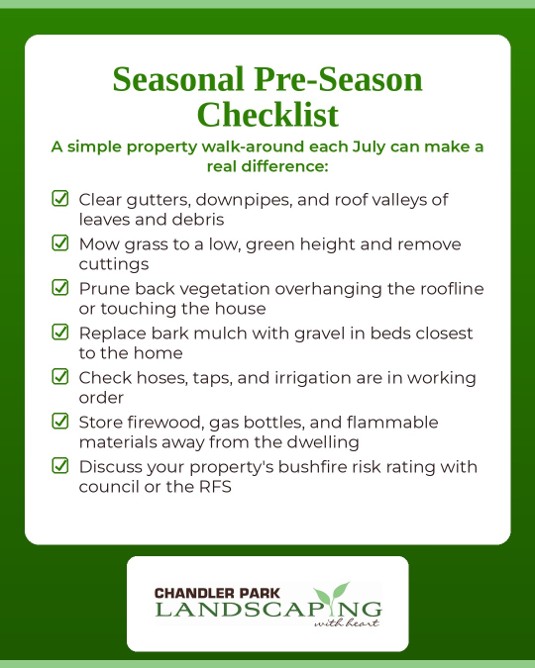
As bushfire season approaches each July, a simple property walk-around can make a significant difference:
- Clear gutters, downpipes, and roof valleys of leaves and debris
- Mow grass to a low, green height and remove cuttings
- Prune back vegetation overhanging the roofline or touching the house
- Replace bark mulch with gravel in beds closest to the home
- Check that hoses, taps, and irrigation are in working order
- Store firewood, gas bottles, and flammable materials well away from the dwelling
- Discuss your property’s bushfire risk rating with your local council or the Rural Fire Service if you’re on acreage or near bushland
Fire-Resistant Doesn’t Mean Boring
One of the biggest misconceptions about fire-resistant landscaping is that it means giving up on a beautiful garden. In reality, many of the most fire-conscious design choices – layered native plantings, gravel pathways, feature retaining walls, and well-maintained lawns – are also some of the most attractive, low-maintenance options available to SEQ homeowners. Good design simply means working with fire safety as one more factor, alongside soil, climate, and aesthetics.
Frequently Asked Questions
1. When does bushfire season start in Southeast Queensland?
Bushfire season in SEQ typically runs from around July through to November, though dry conditions can extend this in either direction. Local fire danger ratings and total fire ban notices are the best real-time indicator
2. Are native plants always more fire-prone?
No. Some natives, particularly oil-rich species like certain eucalypts, carry higher fire risk, but many natives such as Lomandra and Westringia are excellent low-flammability choices. It’s about species selection, not avoiding natives altogether.
3. What is the most important zone for fire-resistant landscaping?
Zone 1, the area within roughly 10 metres of your home, has the greatest impact on ember attack and fire spread, making it the priority area for fire-conscious design and maintenance.
4. Is mulch always a fire risk?
Fine, dry organic mulches can ignite easily, but coarser mulches and inorganic options like gravel or scoria are much safer, particularly close to the home
5. Can hedges and dense planting still work in a fire-resistant garden?
Yes, provided they’re kept well-hydrated, spaced away from the home, and not directly beneath tree canopies. Lilly Pilly hedging is a popular SEQ choice that works well when properly maintained.
6. Do retaining walls help with bushfire protection?
Retaining walls and other hardscape elements act as physical firebreaks, interrupting continuous vegetation and reducing fuel load near the house
7. How often should I clear gutters and garden debris before fire season?
Ideally, a thorough clear-out in early winter before fire danger ratings climb, followed by regular checks through the season, especially after windy weather.
8. Does irrigation really make a difference to fire risk?
Yes. Well-irrigated, hydrated plants are significantly more resistant to ignition than dry, stressed vegetation, which is why consistent watering in Zone 1 is a recommended fire-safety measure
9. Is fire-resistant landscaping only relevant for acreage or rural properties?
No. Many SEQ suburbs border bushland reserves, parks, or vegetated corridors, meaning standard residential blocks can still face meaningful bushfire risk.
10. Should I get a professional assessment of my garden’s fire risk?
If you’re unsure, a landscaping professional can assess plant placement, mulch choice, and defensible space alongside your local council’s bushfire guidelines, helping you balance safety with the garden you want.
Ready to Make Your Garden Fire-Smart?
At Chandler Park Landscaping, we help SEQ homeowners design gardens that look beautiful year-round while genuinely reducing bushfire risk. Whether you need a full landscape redesign, advice on plant selection, or a pre-season property assessment, our horticulture-trained team is here to help.
Get in touch with Nigel and the Chandler Park Landscaping team today to start planning a garden that protects your home as confidently as it welcomes you into it.
Phone: 0423 834 320
Email: [email protected]
Website: chandlerparklandscaping.com.au
Comments are closed here.