
Pest & Disease Management for Brisbane Gardens: Your Spring Pest Emergence Guide
November 3, 2026 5:11 am -Warming temperatures and fresh spring growth bring pests and diseases out of dormancy across SEQ. Here’s how to spot problems early and manage them the smart way.
Every spring, without fail, I start fielding calls from clients noticing the same thing: new leaf growth suddenly covered in aphids, roses developing black spots overnight, or seedlings vanishing to snails within days of planting. Spring in South East Queensland is a season of rapid change. Warming soil and longer daylight hours trigger a flush of new, tender growth across gardens, and that same soft new growth is exactly what pests and fungal diseases are waiting for after a quieter winter.
As a horticulturalist working across Brisbane and SEQ gardens, I see the same handful of pest and disease issues emerge every spring, and the good news is that most of them are entirely manageable with the right approach. In this guide, I’ll walk you through what to watch for as the weather warms, and how to manage pests and disease in a way that protects your garden without reaching for the strongest spray on the shelf as a first response.
Why Spring Triggers a Surge in Pests and Disease
Understanding why spring is such an active season helps explain how to manage it. Rising temperatures speed up insect life cycles, meaning pest populations that were barely active through winter can multiply rapidly once conditions warm. At the same time, plants are pushing out soft, nutrient-rich new growth to take advantage of the improving weather, and this new growth is far more attractive and vulnerable to sap-sucking insects and fungal spores than the older, hardened foliage from winter.
Add in SEQ’s rising humidity as spring progresses toward the wet season, and you’ve got the perfect combination for fungal diseases to establish, since most fungal pathogens need moisture on the leaf surface to germinate and spread.
Common Spring Pests in South East Queensland Gardens
A handful of pests reliably show up in SEQ gardens every spring, and recognising them early makes management far simpler.
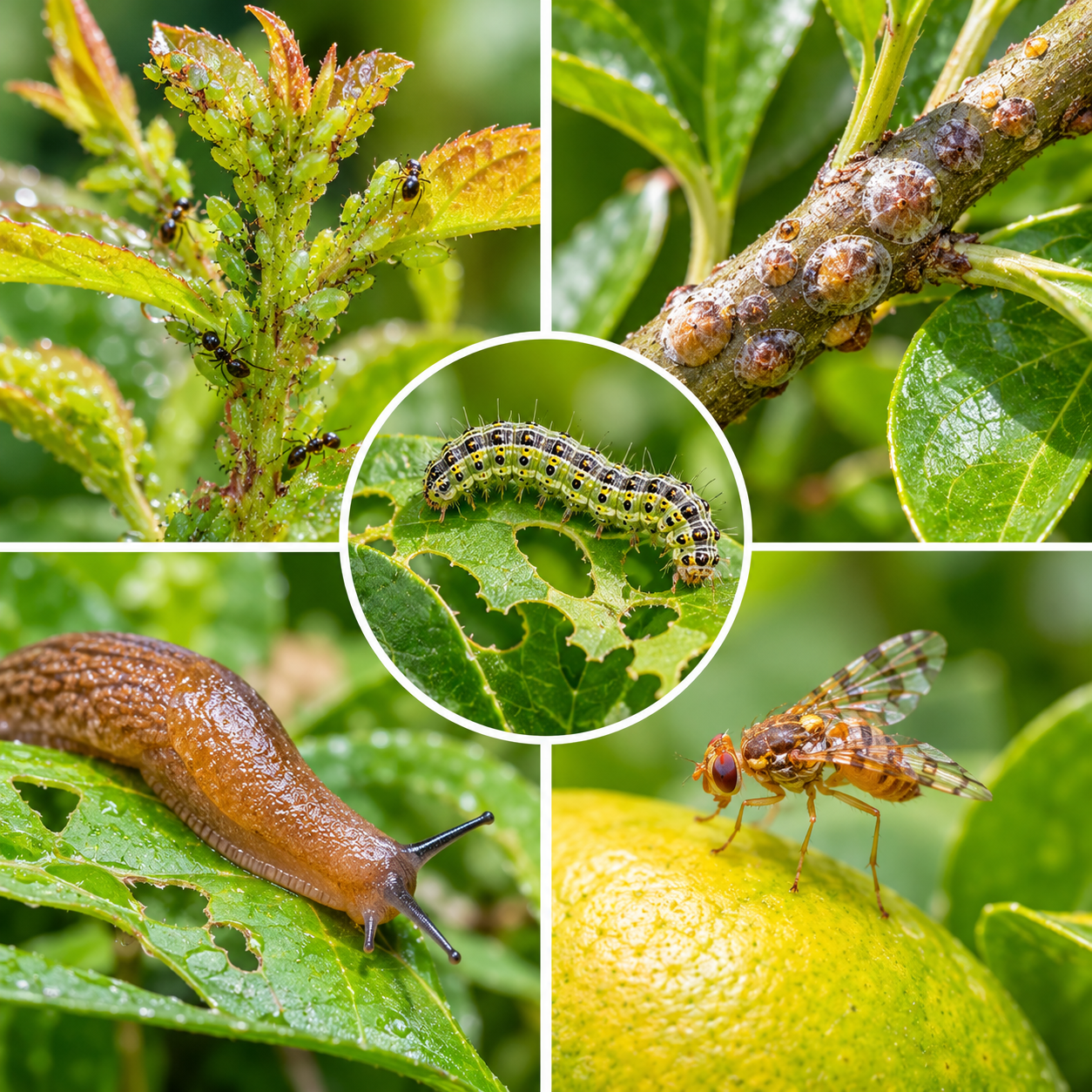
- Aphids cluster on new growth tips and flower buds, sucking sap and often leaving behind a sticky honeydew residue that attracts ants and can lead to sooty mould.
- Scale insects appear as small, waxy bumps along stems and the undersides of leaves, weakening plants over time and, like aphids, producing honeydew that encourages sooty mould.
- Caterpillars and loopers, including the larvae of common moths and butterflies, chew through leaves and can defoliate soft new growth remarkably quickly if left unchecked.
- Snails and slugs become highly active with spring rain and warm nights, targeting soft seedlings, herbs, and the fresh growth on ornamentals.
- Fruit fly begin emerging in spring ahead of the main summer season, making early monitoring important for anyone growing citrus or other fruiting trees.
Common Spring Diseases to Watch For
Fungal and bacterial issues tend to follow a similar pattern to pests, appearing as humidity climbs through
spring.
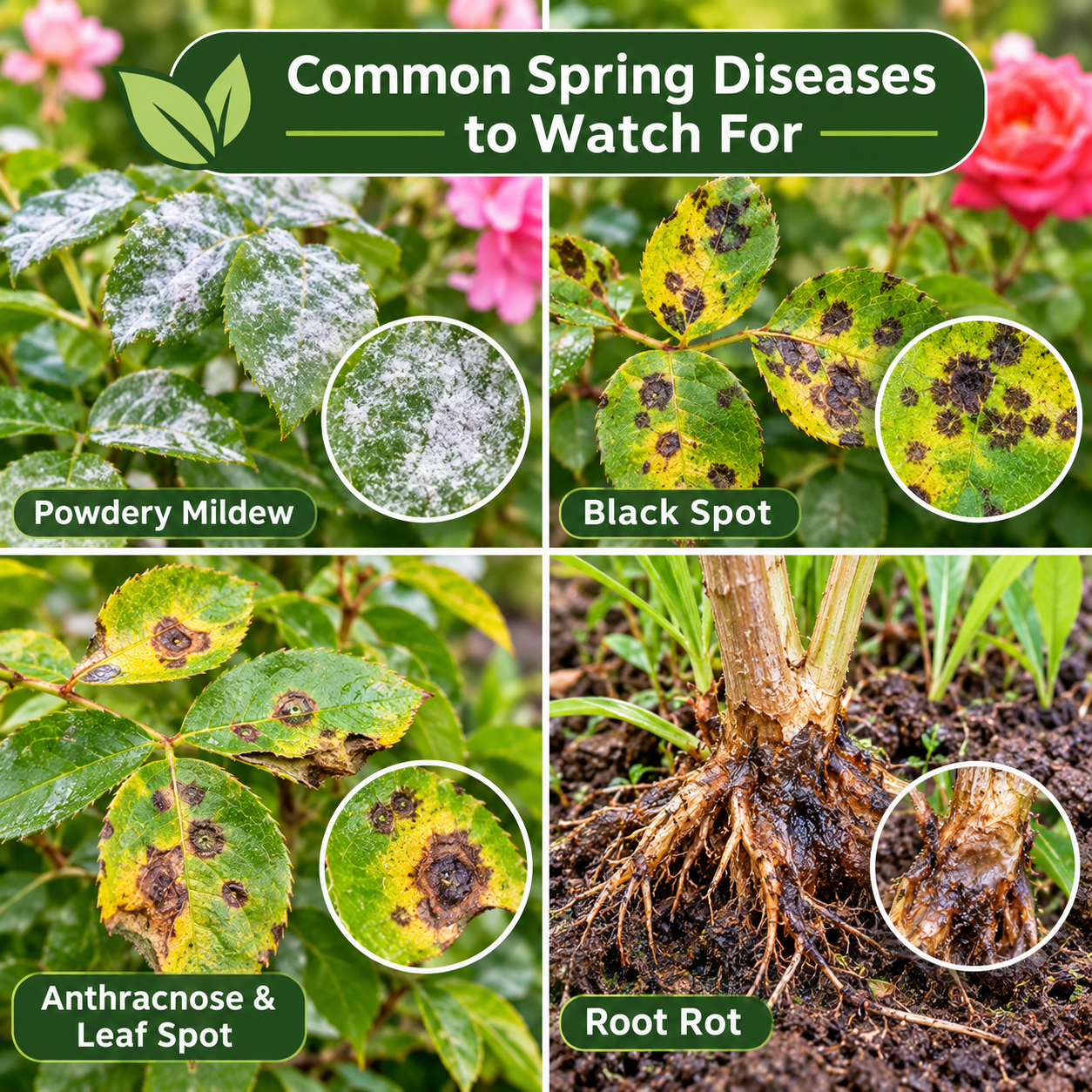
- Powdery mildew shows up as a white, dusty coating on leaves, particularly common on roses, cucurbits, and other soft-leaved ornamentals during humid, still weather.
- Black spot affects roses especially, causing dark blotches on foliage that eventually lead to yellowing and leaf drop if not managed.
- Anthracnose and leaf spot diseases cause dark, sunken lesions on leaves and fruit, thriving in the wetter, warmer conditions spring brings.
- Root rot risk increases where drainage is poor and spring rain saturates garden beds, particularly in gardens with heavier clay soils that hold moisture longer
Integrated Pest Management: Monitor Before You Treat
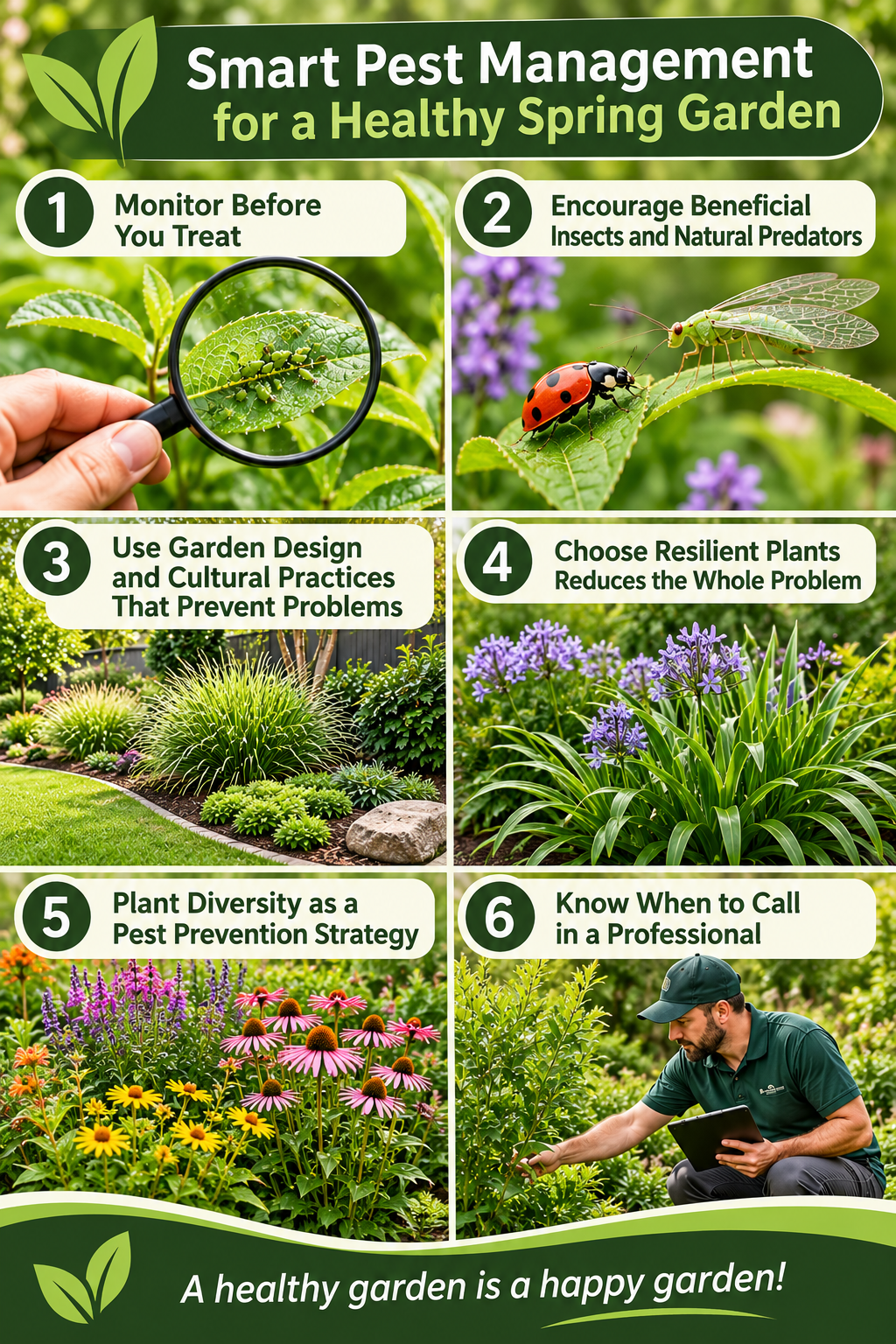
The single biggest shift I encourage clients to make is moving from a reactive, spray-everything approach to an integrated pest management mindset. This simply means monitoring your garden regularly, correctly identifying what you’re actually dealing with, and choosing the least invasive effective solution first, rather than automatically reaching for a broad-spectrum chemical treatment.
A weekly walk through the garden checking the undersides of leaves, new growth tips, and any plants that looked stressed the week before catches most problems while they’re still small and easy to manage. Many minor aphid or scale outbreaks can be controlled simply by squashing them by hand, hosing them off with a strong jet of water, or removing and disposing of a heavily affected leaf or stem before the problem spreads.
Encouraging Beneficial Insects and Natural Predators
One of the most effective long-term pest management strategies is encouraging the natural predators that keep pest populations in check without any intervention from you. Ladybirds and their larvae are voracious aphid predators, lacewings target aphids and mites, and predatory wasps parasitise caterpillar eggs and larvae before they can do serious damage.
Planting a range of flowering natives and companion species attracts these beneficial insects into the garden and keeps them there through the season, alongside birds and even garden frogs, which happily feed on snails, slugs, and a range of other garden pests. A garden with genuine plant diversity and habitat, rather than a single dominant species repeated throughout, will almost always have fewer severe pest outbreaks than a monoculture planting.
Garden Design and Cultural Practices That Prevent Problems
Good garden design does a huge amount of the pest and disease prevention work before a single spray is ever needed. Proper plant spacing allows airflow between foliage, which reduces the humid, still conditions that fungal diseases need to establish, an important consideration when following The Art of Garden Design: Tailoring Your Space to Nature’s Needs during any new planting or garden refresh this spring.
Watering practices matter enormously too. Watering at soil level rather than overhead, and ideally earlier in the day, keeps foliage drier overnight and significantly reduces conditions favourable to powdery mildew and other fungal issues. A good layer of mulch also helps by preventing fungal spores in the soil from splashing up onto lower leaves during rain or watering, while keeping root zones at a more even moisture level and reducing plant stress overall.
Choosing Resilient Plants Reduces the Whole Problem
Some of the best pest and disease management happens at the plant selection stage, long before spring even arrives. Species that are naturally well-suited to SEQ’s climate and soil tend to grow with less stress, and stressed plants are always more susceptible to pest attack and disease than healthy, vigorous ones. This is one of the reasons I steer so many clients toward the same principles found in garden beds with layered heights, where hardy, climate-appropriate plant choices reduce the ongoing maintenance burden, including the amount of pest and disease intervention a garden needs over time.
Plant Diversity as a Pest Prevention Strategy
Relying heavily on one or two plant species across a garden creates the perfect conditions for a single pest or disease to spread unchecked, since it has an unlimited, uninterrupted food source to move through. Introducing a broader mix of textures, forms, and species, similar to the layered approach used when adding vibrancy to your garden, naturally breaks up pest pathways and reduces the speed at which any single outbreak can spread through the whole garden.
When to Call in a Professional
Most spring pest and disease issues can be managed with the cultural and organic approaches covered above, but there are times when it’s worth bringing in professional support, particularly with established fruit trees, significant infestations that haven’t responded to early intervention, or diseases affecting the structural health of larger trees. A professional assessment can correctly identify the issue, recommend the most targeted treatment available, and help prevent a recurring problem from becoming an annual battle.
A Simple Spring Pest Calendar for SEQ Gardens
- Early spring: begin regular monitoring as new growth appears, and watch citrus and roses closely
for early aphid and scale activity. - Mid spring: check for caterpillar damage on soft new foliage, and start fruit fly monitoring around
citrus and other fruiting trees. - Late spring: keep an eye on humidity-driven fungal issues like powdery mildew as temperatures
and moisture both climb toward summer, and maintain snail and slug control around vegetable
beds and seedlings.
Final Thoughts: Stay Ahead of Spring Pests, Not Behind Them
The gardens that come through spring looking their best aren’t the ones that never see a pest or disease issue, they’re the ones where problems are spotted early and managed with a calm, considered approach. Regular monitoring, good garden design, healthy soil, and resilient plant choices do far more heavy lifting than any single spray ever will.
If you’re noticing pest or disease issues in your garden this spring, or want a garden design that’s naturally more resistant to these problems from the outset, get in touch with Nigel and the team at Chandler Park Landscaping. We’re always happy to help you get ahead of the season.
Frequently Asked Questions
- Why do pests suddenly appear in my garden every spring?
Warming temperatures speed up insect life cycles, and the soft new growth plants produce in spring is more attractive and vulnerable to pests than older, hardened foliage from winter.
- What are the most common garden pests in Brisbane during spring?
Aphids, scale insects, caterpillars and loopers, snails and slugs, and early-season fruit fly are among the most common pests appearing in SEQ gardens as spring progresses.
- How do I know if my plant has a fungal disease or a pest problem?
Fungal diseases typically appear as spots, white powdery coatings, or lesions on leaves, while pest damage usually shows as chewed foliage, sticky honeydew residue, or visible insects on new growth and the undersides of leaves.
- What is integrated pest management?
Integrated pest management is an approach that prioritises regular monitoring, correct identification, and the least invasive effective solution first, such as hand removal or water jets, before considering chemical treatments.
- How can I prevent powdery mildew on my plants?
Water at soil level rather than overhead, ensure good airflow through proper plant spacing, and avoid watering late in the day so foliage isn’t left damp overnight, all of which reduce the humid conditions powdery mildew needs to establish.
- Do ladybirds actually help control garden pests?
Yes, ladybirds and their larvae are effective natural predators of aphids, and encouraging them into the garden through diverse, flowering plantings can meaningfully reduce aphid populations without chemical intervention.
- Should I remove plants affected by black spot or powdery mildew?
Removing and disposing of heavily affected leaves or stems as soon as they’re noticed helps stop the spread, though the whole plant rarely needs to be removed if the issue is caught and managed early.
- Why does plant diversity help with pest and disease management?
A garden relying on one or two dominant plant species gives pests and diseases an uninterrupted food source, whereas greater diversity in plant species naturally breaks up pest pathways and slows the spread of any single outbreak.
- When should I start monitoring for fruit fly?
Early to mid spring is the right time to begin fruit fly monitoring around citrus and other fruiting trees, well ahead of the main summer season when populations peak.
- When should I call a professional for pest or disease issues?
It’s worth calling a professional for significant infestations that haven’t responded to early intervention, issues affecting established fruit trees, or problems impacting the structural health of larger trees, where a targeted, expert assessment makes a real difference.
Comments are closed here.